ABOUt
At the moment of its performance, the artwork belongs to the artist.
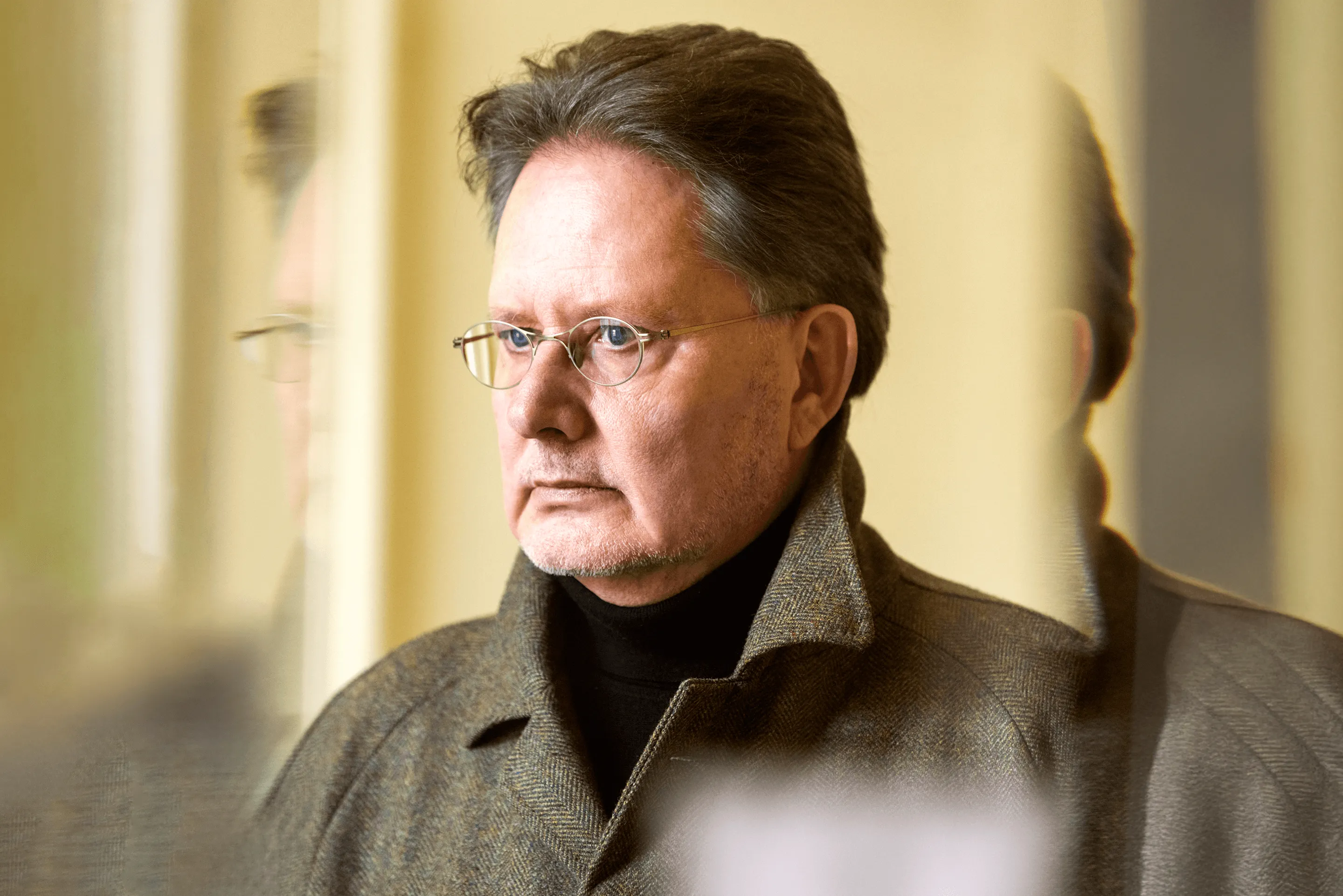
Nach ersten Studien in Oslo ging Bjørn Waag nach München und Berlin um die Fächer Gesang, Dirigieren, Musikwissenschaft und Philosophie abzuschließen. Er war Kulturredakteur bei der ältesten Tageszeitung Norwegens "Morgenbladet" und Meisterschüler von Dietrich Fischer-Dieskau und Ernst Haefliger. Ein erstes Festengagement (Trier 1983) führte ihn 1987 zur Oper in Bremen, darauf folgten u.a. das Nationaltheater Mannheim, die Oper Basel, das Musiktheater im Revier und das Deutsche Nationaltheater Weimar.
Waag übernahm zudem 2003 den Lehrstuhl Kurt Widmers an der Hochschule für Musik in Basel, wo er eine volle Hauptfachklasse betreute.
Schon im November 1997 wurde Waag die Mitgliedschaft in der Freien Akademie der Künste angetragen, "... in Anerkennung seiner vielfältigen künstlerischen Arbeit im Bereich Darstellende Kunst/Theater."
Als Gastsänger ist er europaweit unterwegs: An der Bayerischen Staatsoper, dem Staatstheater Stuttgart, "La Fenice" in Venedig und an der "Maggio Musicale" in Florenz sowie dem „Teatro Real Madrid”, um nur einige zu nennen. Mit Konzerten und Liederabenden trat er in ganz Europa, von Kirkenes bis Palermo, auf. Eine langjährige Zusammenarbeit mit dem Radio-Sinfonie-Orchester des Hessischen Rundfunks begann schon 1988.
Waags Opernrepertoire umfasst etwa 150 Rollen, die er in über 180 Produktionen auf die Bühne brachte. Einen Schwerpunkt seiner Arbeit bildet die zeitgenössische Musik: Komponisten wie Manfred Trojahn, Klaus Huber, Walter Zimmermann, Roland Moser und Detlef Heusinger schrieben Rollen speziell für ihn. Er arbeitete mit Regisseuren wie Claus Guth, Vera Nemirova, Elisabeth Stöppler, Jossi Wieler, Gisbert Jäkel, Jürgen Gosch u.a. sowie den Dirigenten Dennis Russell Davies, Marko Letonja, Ulf Schirmer, Jun Märkl, Marcello Viotti, Lothar Zagrosek, Eliahu Inbal, Wolfgang Bozic, Michael Boder, Jeffrey Tate.
Waag gestaltete 2012/13 die Titelpartie in Trojahns "Orest" (DEA) an der Staatsoper Hannover und war bisher schon in fünf Neuinszenierungen und zahllosen Repertoirevorstellungen des "Ring" als Alberich und Gunther an den verschiedensten Häusern zu erleben, zum ersten Mal an der Oper Graz 2000 unter der Regie Gisbert Jäkels und der Leitung Ulf Schirmers.
Beckmesser in Wagners "Meistersinger" bei der ersten Inszenierung des Werks in Polen seit dem Jahre 1932, Dr. Schön in Bergs "Lulu" (Regie: E. Stöppler), Shylock in Reynold Hahns "Der Kaufmann von Venedig", die Prager Erstaufführung des gigantischen Werks "Totentanz" von Thomas Adès unter der Leitung des Komponisten, eine Konzerttournee mit Schönbergs "Überlebender aus Warschau" bilden eine Auswahlseines Bühnenschaffens der letzten Jahre. Zudem debütierte er u.a. als König von Ägypten in Aida, Don Pizarro in Fidelio sowie in der Titelpartie des Fliegenden Holländers. In Norwegen sang er 2020 Zurga im „Perlenfischer” und die riesige Partie des Faust/Dr. Marianus in Schumanns „Faust-Szenen”.
Im Münchner Gasteig, der Berliner Philharmonie, der Stuttgarter Liederhalle, der Alten Oper Frankfurt und anderen bedeutenden Konzertsälen ist er regelmäßig an der Seite von Jan-Josef Liefers als Alberich/Gunther in Loriots "Der Ring an einem Abend" zu erleben. Von Bjørn Waag liegen zahlreiche CD-Aufnahmen mit Werken u.a. von Wagner, Schönberg, Wolf-Ferrari und Laporte (K. in "Das Schloss") vor. Der Künstler gilt als komplexer, aber tiefschürfender Ausloter der Abgründe gebrochener Bühnencharaktere. Seine Erkundungsreise dauert an.
(Biographie zum Download als PDF unter Presskit.)
PÄDAGOGE
Waag war künstlerischer Leiter des von ihm entwickelten Studios für Musiktheater "Front Stage Basel" Initiator und Präsident des "LiedForum Basel e.V.", 2003-2008 Professor für Gesang und Liedgestaltung an der HfM Basel sowie Sprecher des Lehrkörpers und Mitglied des Aufsichtsrates der Musik-Akademie.
Bjørn Waag – Kunstlehre
(Auszüge aus einem Interview in Basel)
„Imperativ ist: Den richtigen Umgang mit einer Vorlage beherrschen lernen, also die Partie, die es im Moment zu gestalten gilt, schon in der Vorbereitungsphase zu durchdringen. Ich würde diesen Vorgang mit dem Umgang mit Menschen vergleichen: Achtung zeigen, neugierig sein, der Vorlage ein Stück Vertrauen (also Liebe) entgegenbringen.
Dadurch kann die Fähigkeit entstehen, subtextuell notierte Signale aufzunehmen, um sie dann eigenständig umsetzen zu können. [...]
Wenn der singende Künstler sich mit dem jeweiligen Werk sehr ernsthaft auseinandersetzt, gibt das Werk etwas zurück, was einen selbst wiederum verändert. Und was einen verändert, ist das, was man lernt, da lernen schlicht sich verändern heißt. Jeder Künstler baut sich sein eigenes Haus aus den Wissenssteinen und dem Material, was er sich aus verschiedenen Höreindrücken und von allen Lehrern Zeit seines Lebens zusammensetzt. Dieser Prozess des "Hausbauens" muss begleitet werden.
Nur gemeinsam können Schaffende, Interpreten und Pädagogen die Flaschenpost der Substanz unserer Botschaft, die Utopie einer Rettung, in die Zukunft hinübertragen.”
PUBLIZIST
Schon als 18-Jähriger wurde Waag zum Konzert- und Opernkritiker beim Morgenbladet, der ältesten Tageszeitung Norwegens berufen. In den darauf folgenden fünf Jahren stieg er als Kulturredakteur und Mitglied der Nachtredaktion (CvD) auf. und veröffentlichte über 500 Artikel, Interviews und Essays zu kulturellen und gesellschaftlichen Fragen. Die Zusammenarbeit mit verschiedensten Zeitschriften zur neuen Musik in mehreren europäischen Ländern dauert bis heute an.
Auch in der Politik war Waag tätig. So leitete er den Wahlkampf der Partei DIE LINKE. in Weimar (TH) bei den Landtagswahlen 2014, und die Öffentlichkeitsarbeit der Partei von 2014-2017.
Im Rahmen einer von ihm initiierten und koordinierten Bürgerinitiative gelang es ihm, durch die Bürgerinitiative KeinHalbesDNT den geplanten Umzug des Musiktheaters des Deutschen Nationaltheaters Weimar in die Landeshauptstadt Erfurt zu verhindern.
FRAGEBOGEN
Wo haben Sie bisher gelebt?
In Kirkenes (am Nordkap), Oslo, München, Berlin, Trier, Bremen, Mannheim, Basel, Weimar, Fiesole.
Wo möchten Sie unbedingt noch leben?
In einer verbesserten Gesellschaftsordnung.
Was für eine Ausbildung haben Sie gemacht?
Eine langwierige: Sie dauert noch an.
Ihre Lieblingsfilme?
Viscontis "Die Verdammten", Woody Allens "Stardust Memories", das gesamte Oeuvre Alexander Kluges.
Ihr eindrucksvollstes Musikerlebnis?
Beethoven op. 111 gespielt von Daniel Barenboim 2003.
Ihre Lieblingsopern?
Was für eine Frage.
Was schätzen Sie bei Musikern am meisten?
Wachheit, Unvoreingenommenheit, Intelligenz und den Mut, gewähren zu lassen.
Was ist Ihr größtes Laster?
Ungeduld und die Neigung, aus Dekonstruktion Destruktion zu machen.
Welches Ziel wollen Sie unbedingt erreichen?
Wahrhaftig sein.
Was hassen Sie am meisten?
Zu Hass möchte ich nicht fähig sein. Ich verachte Heuchler, die Narretei der sozialen Medien, Oberflächlichkeit und jedes affirmative Verhalten.
After completing his initial studies in Oslo, Bjørn Waag moved to Munich and Berlin to study singing, conducting, musicology and philosophy. He was cultural editor at Norway's oldest daily newspaper, Morgenbladet, and a master student of Dietrich Fischer-Dieskau and Ernst Haefliger. His first permanent engagement (Trier, 1983) took him to the opera in Bremen in 1987, followed by the National Theatre in Mannheim, the Basel Opera, the Musiktheater im Revier and the German National Theatre in Weimar, among others.
In 2003, Waag also took over Kurt Widmer's chair at the University of Music in Basel, where he taught a full major class.
In November 1997, Waag was offered membership in the Free Academy of Arts, ‘... in recognition of his diverse artistic work in the field of performing arts/theatre.’
He performs throughout Europe as a guest singer: at the Bavarian State Opera, the State Theatre in Stuttgart, La Fenice in Venice, the Maggio Musicale in Florence and the Teatro Real Madrid, to name but a few. He has performed in concerts and recitals throughout Europe, from Kirkenes to Palermo. A long-standing collaboration with the Radio Symphony Orchestra of Hessischer Rundfunk began in 1988.
Waag's opera repertoire comprises around 150 roles, which he has performed in over 180 productions. Contemporary music is a focal point of his work: composers such as Manfred Trojahn, Klaus Huber, Walter Zimmermann, Roland Moser and Detlef Heusinger have written roles especially for him. He has worked with directors such as Claus Guth, Vera Nemirova, Elisabeth Stöppler, Jossi Wieler, Gisbert Jäkel, Jürgen Gosch and others, as well as conductors Dennis Russell Davies, Marko Letonja, Ulf Schirmer, Jun Märkl, Marcello Viotti, Lothar Zagrosek, Eliahu Inbal, Wolfgang Bozic, Michael Boder and Jeffrey Tate.
In 2012/13, Waag played the title role in Trojahn's ‘Orest’ (DEA) at the Hanover State Opera in 2012/13 and has appeared in five new productions and countless repertoire performances of ‘Der Ring’ as Alberich and Gunther at various opera houses, most notably at the Graz Opera in 2000, directed by Gisbert Jäkel and conducted by Ulf Schirmer.
Beckmesser in Wagner's ‘Meistersinger’ in the first production of the work in Poland since 1932, Dr. Schön in Berg's ‘Lulu’ (directed by E. Stöppler), Shylock in Reynold Hahn's ‘Der Kaufmann von Venedig’, the Prague premiere of Thomas Adès' gigantic work “Totentanz” conducted by the composer, and a concert tour with Schoenberg's ‘Überlebender aus Warschau’ are a selection of his stage work in recent years. He also made his debut as the King of Egypt in Aida, Don Pizarro in Fidelio and in the title role of The Flying Dutchman. In Norway in 2020, he sang Zurga in The Pearl Fishers and the huge role of Faust/Dr Marianus in Schumann's Faust Scenes.
He regularly performs alongside Jan-Josef Liefers as Alberich/Gunther in Loriot's ‘Der Ring an einem Abend’ at Munich's Gasteig, the Berlin Philharmonic, Stuttgart's Liederhalle, Frankfurt's Alte Oper and other major concert halls.
Bjørn Waag has made numerous CD recordings of works by Wagner, Schönberg, Wolf-Ferrari and Laporte (K. in ‘Das Schloss’), among others. The artist is regarded as a complex but profound explorer of the abysses of broken stage characters. His journey of discovery continues.
(Biography for download as PDF under Presskit.)
EDUCATOR
Waag was artistic director of the music theatre studio he developed, Front Stage Basel, initiator and president of LiedForum Basel e.V., professor of singing and song interpretation at the Basel Academy of Music from 2003 to 2008, spokesperson for the teaching staff and member of the supervisory board of the music academy.
Bjørn Waag – Art Education
(Excerpts from an interview in Basel)
"It is imperative to learn how to handle a score correctly, i.e. to thoroughly understand the part that needs to be performed at the moment during the preparation phase. I would compare this process to dealing with people: show respect, be curious, show a little trust (i.e. love) towards the score.
This can develop the ability to pick up on subtextual signals and then implement them independently. [...]
When the singing artist engages very seriously with the work in question, the work gives something back that in turn changes you. And what changes you is what you learn, because learning simply means changing. Every artist builds their own house from the building blocks of knowledge and material that they gather from various listening experiences and from all the teachers they have had throughout their lives. This process of ‘house building’ must be accompanied.
Only together can creators, performers and educators carry the message in a bottle, the substance of our message, the utopia of salvation, into the future.”
PUBLISHER
At the age of 18, Waag was appointed concert and opera critic at Morgenbladet, Norway's oldest daily newspaper. Over the next five years, he rose to become culture editor and member of the night editorial team (CvD) and published over 500 articles, interviews and essays on cultural and social issues. He continues to collaborate with various magazines on new music in several European countries.
Waag has also been active in politics. He led the election campaign for the DIE LINKE party in Weimar (TH) in the 2014 state elections and was responsible for the party's public relations from 2014 to 2017.
As part of a citizens' initiative he initiated and coordinated, he succeeded in preventing the planned relocation of the music theatre of the German National Theatre Weimar to the state capital Erfurt through the citizens' initiative KeinHalbesDNT.
QUESTIONNAIRE
Where have you lived so far?
In Kirkenes (at the North Cape), Oslo, Munich, Berlin, Trier, Bremen, Mannheim, Basel, Weimar, Fiesole.
Where would you still like to live?
In an improved social order.
What kind of education did you receive?
A lengthy one: it is still ongoing.
Your favourite films?
Visconti's ‘The Damned’, Woody Allen's ‘Stardust Memories’, the entire oeuvre of Alexander Kluge.
Your most memorable musical experience?
Beethoven's Op. 111 played by Daniel Barenboim in 2003.
Your favourite operas?
What a question.
What do you value most in musicians?
Alertness, impartiality, intelligence and the courage to let things be.
What is your greatest vice?
Impatience and the tendency to turn deconstruction into destruction.
What goal do you absolutely want to achieve?
To be truthful.
What do you hate most?
I don't want to be capable of hatred. I despise hypocrites, the folly of social media, superficiality and any kind of affirmative behaviour.
Tras cursar sus primeros estudios en Oslo, Bjørn Waag se trasladó a Múnich y Berlín para completar sus estudios de canto, dirección, musicología y filosofía. Fue redactor cultural del periódico más antiguo de Noruega, «Morgenbladet», y alumno destacado de Dietrich Fischer-Dieskau y Ernst Haefliger. Su primer contrato fijo (Trier, 1983) le llevó en 1987 a la Ópera de Bremen, a la que siguieron, entre otros, el Teatro Nacional de Mannheim, la Ópera de Basilea, el Musiktheater im Revier y el Teatro Nacional Alemán de Weimar.
Waag también asumió en 2003 la cátedra de Kurt Widmer en la Escuela Superior de Música de Basilea, donde impartió clases a una clase completa de especialización.
Ya en noviembre de 1997, Waag fue invitado a formar parte de la Academia Libre de las Artes, «... en reconocimiento a su variada labor artística en el ámbito de las artes escénicas y el teatro».
Como cantante invitado, ha actuado por toda Europa: en la Ópera Estatal de Baviera, el Teatro Estatal de Stuttgart, «La Fenice» de Venecia y el «Maggio Musicale» de Florencia, así como en el Teatro Real de Madrid, por nombrar solo algunos. Ha ofrecido conciertos y recitales en toda Europa, desde Kirkenes hasta Palermo. En 1988 comenzó una larga colaboración con la Orquesta Sinfónica de la Radio de Hesse.
El repertorio operístico de Waag abarca unos 150 papeles, que ha interpretado en más de 180 producciones. Una parte importante de su trabajo se centra en la música contemporánea: compositores como Manfred Trojahn, Klaus Huber, Walter Zimmermann, Roland Moser y Detlef Heusinger han escrito papeles especialmente para él. Ha trabajado con directores como Claus Guth, Vera Nemirova, Elisabeth Stöppler, Jossi Wieler, Gisbert Jäkel, Jürgen Gosch, entre otros, así como con los directores Dennis Russell Davies, Marko Letonja, Ulf Schirmer, Jun Märkl, Marcello Viotti, Lothar Zagrosek, Eliahu Inbal, Wolfgang Bozic, Michael Boder y Jeffrey Tate.
En 2012/13, Waag interpretó el papel protagonista en «Orest» de Trojahn (DEA) en la Ópera Estatal de Hannover y hasta ahora ha participado en cinco nuevas producciones e innumerables representaciones del «Anillo» como Alberich y Gunther en diferentes teatros, por primera vez en la Ópera de Graz en 2000, bajo la dirección de Gisbert Jäkel y Ulf Schirmer.
Beckmesser en «Los maestros cantores» de Wagner en la primera puesta en escena de la obra en Polonia desde 1932, el Dr. Schön en «Lulu» de Berg (dirección: E. Stöppler), Shylock en El mercader de Venecia de Reynold Hahn, el estreno en Praga de la gigantesca obra Totentanz de Thomas Adès bajo la dirección del compositor, una gira de conciertos con Überlebender aus Warschau de Schönberg constituyen una selección de su trabajo teatral de los últimos años. Además, debutó, entre otros, como el rey de Egipto en Aida, Don Pizarro en Fidelio y en el papel protagonista de El holandés errante. En Noruega cantó en 2020 Zurga en «El pescador de perlas» y el enorme papel de Fausto/Dr. Marianus en «Faust-Szenen» de Schumann.
En el Gasteig de Múnich, la Filarmónica de Berlín, la Liederhalle de Stuttgart, la Alte Oper de Fráncfort y otras importantes salas de conciertos se le puede ver regularmente junto a Jan-Josef Liefers como Alberich/Gunther en «Der Ring an einem Abend» de Loriot. Bjørn Waag cuenta con numerosas grabaciones en CD con obras de Wagner, Schönberg, Wolf-Ferrari y Laporte (K. en «Das Schloss»), entre otros. El artista es considerado un explorador complejo pero profundo de los abismos de los personajes teatrales quebrantados. Su viaje de exploración continúa.
(Biografía disponible para descargar en formato PDF en Presskit).
PEDAGOGO
Waag fue director artístico del estudio de teatro musical «Front Stage Basel», creado por él mismo, impulsor y presidente del «LiedForum Basel e.V.», profesor de canto y interpretación de lied en la HfM Basel entre 2003 y 2008, portavoz del cuerpo docente y miembro del consejo de administración de la Academia de Música.
Bjørn Waag – Enseñanza del arte
(Extractos de una entrevista en Basilea)
«Es imprescindible aprender a manejar correctamente una partitura, es decir, comprender a fondo la parte que hay que interpretar en cada momento ya en la fase de preparación. Yo compararía este proceso con el trato con las personas: mostrar respeto, ser curioso, depositar un poco de confianza (es decir, amor) en la partitura.
De este modo, puede surgir la capacidad de captar señales subtextuales para luego poder aplicarlas de forma independiente. [...]
Cuando el artista cantante se enfrenta con mucha seriedad a la obra en cuestión, esta le devuelve algo que, a su vez, le transforma. Y lo que le transforma es lo que aprende, ya que aprender significa simplemente cambiar. Cada artista construye su propia casa con los ladrillos del conocimiento y el material que recopila de diferentes impresiones auditivas y de todos los maestros a lo largo de su vida. Este proceso de «construcción de la casa» debe ir acompañado.
Solo juntos, los creadores, intérpretes y pedagogos pueden transmitir al futuro el mensaje de nuestra utopía de salvación, el mensaje en la botella de nuestra esencia».
PUBLICISTA
A los 18 años, Waag fue nombrado crítico de conciertos y ópera en el Morgenbladet, el periódico más antiguo de Noruega. En los cinco años siguientes, ascendió a redactor cultural y miembro de la redacción nocturna (CvD) y publicó más de 500 artículos, entrevistas y ensayos sobre temas culturales y sociales. Su colaboración con diversas revistas sobre música contemporánea en varios países europeos continúa hasta hoy.
Waag también ha estado activo en la política. Dirigió la campaña electoral del partido DIE LINKE. en Weimar (TH) en las elecciones regionales de 2014 y las relaciones públicas del partido entre 2014 y 2017.
En el marco de una iniciativa ciudadana que él mismo inició y coordinó, logró impedir, a través de la iniciativa ciudadana KeinHalbesDNT, el traslado previsto del teatro musical del Teatro Nacional Alemán de Weimar a la capital del estado federado, Erfurt.
CUESTIONARIO
¿Dónde ha vivido hasta ahora?
En Kirkenes (en el Cabo Norte), Oslo, Múnich, Berlín, Tréveris, Bremen, Mannheim, Basilea, Weimar y Fiesole.
¿Dónde le gustaría vivir sin falta?
En un orden social mejorado.
¿Qué estudios ha cursado?
Unos muy largos: aún no han terminado.
¿Sus películas favoritas?
«Los condenados», de Visconti; «Stardust Memories», de Woody Allen; toda la obra de Alexander Kluge.
¿Su experiencia musical más impresionante?
La op. 111 de Beethoven interpretada por Daniel Barenboim en 2003.
¿Sus óperas favoritas?
Qué pregunta.
¿Qué es lo que más valora de los músicos?
La lucidez, la imparcialidad, la inteligencia y el valor de dejar hacer.
¿Cuál es su mayor defecto?
La impaciencia y la tendencia a convertir la deconstrucción en destrucción.
¿Qué objetivo desea alcanzar a toda costa?
Ser sincero.
¿Qué es lo que más odia?
No quiero ser capaz de odiar. Desprecio a los hipócritas, la locura de las redes sociales, la superficialidad y cualquier comportamiento afirmativo.
Dopo i primi studi a Oslo, Bjørn Waag si è trasferito a Monaco di Baviera e a Berlino per conseguire la laurea in canto, direzione d’orchestra, musicologia e filosofia. È stato redattore culturale presso il più antico quotidiano norvegese, il “Morgenbladet”, e allievo di Dietrich Fischer-Dieskau ed Ernst Haefliger. Un primo ingaggio fisso (a Treviri nel 1983) lo portò nel 1987 all’Opera di Brema, a cui seguirono, tra gli altri, il Teatro Nazionale di Mannheim, l’Opera di Basilea, il Musiktheater im Revier e il Teatro Nazionale Tedesco di Weimar.
Nel 2003 Waag ha inoltre assunto la cattedra di Kurt Widmer presso l’Accademia di Musica di Basilea, dove ha seguito un intero corso di specializzazione.
Già nel novembre 1997 a Waag fu offerta l’adesione alla Libera Accademia delle Arti, «... in riconoscimento della sua variegata attività artistica nel campo delle arti dello spettacolo/teatro».
Come cantante ospite si esibisce in tutta Europa: all’Opera di Stato Bavarese, allo Staatstheater di Stoccarda, a «La Fenice» di Venezia, al «Maggio Musicale» di Firenze e al «Teatro Real» di Madrid, solo per citarne alcuni. Si è esibito in concerti e recital in tutta Europa, da Kirkenes a Palermo. La sua collaborazione pluriennale con l’Orchestra Sinfonica della Radio dell’Assia è iniziata già nel 1988.
Il repertorio operistico di Waag comprende circa 150 ruoli, che ha interpretato in oltre 180 produzioni. Un punto centrale del suo lavoro è costituito dalla musica contemporanea: compositori come Manfred Trojahn, Klaus Huber, Walter Zimmermann, Roland Moser e Detlef Heusinger hanno scritto ruoli appositamente per lui. Ha lavorato con registi quali Claus Guth, Vera Nemirova, Elisabeth Stöppler, Jossi Wieler, Gisbert Jäkel, Jürgen Gosch e altri, nonché con i direttori Dennis Russell Davies, Marko Letonja, Ulf Schirmer, Jun Märkl, Marcello Viotti, Lothar Zagrosek, Eliahu Inbal, Wolfgang Bozic, Michael Boder e Jeffrey Tate.
Nel 2012/13 Waag ha interpretato il ruolo principale in “Orest” di Trojahn (DEA) alla Staatsoper di Hannover e finora si è esibito in cinque nuove messe in scena e in innumerevoli rappresentazioni di repertorio del «Ring» nei ruoli di Alberich e Gunther in vari teatri, per la prima volta all’Opera di Graz nel 2000 con la regia di Gisbert Jäkel e la direzione di Ulf Schirmer.
Beckmesser nei «Maestri cantori» di Wagner nella prima messa in scena dell’opera in Polonia dal 1932, il dottor Schön nella «Lulu» di Berg (regia: E. Stöppler), Shylock ne «Il mercante di Venezia» di Reynold Hahn, la prima praghese della monumentale opera «Totentanz» di Thomas Adès sotto la direzione del compositore stesso, una tournée concertistica con «Il sopravvissuto di Varsavia» di Schönberg costituiscono una selezione della sua attività scenica degli ultimi anni. Ha inoltre debuttato, tra l’altro, nel ruolo del Re d’Egitto in “Aida”, di Don Pizarro in “Fidelio” e nel ruolo principale de “L’Olandese Volante”. In Norvegia, nel 2020, ha interpretato Zurga ne “Il pescatore di perle” e l’imponente ruolo di Faust/Dr. Marianus nelle “Scene dal Faust” di Schumann.
Al Gasteig di Monaco, alla Filarmonica di Berlino, alla Liederhalle di Stoccarda, all’Alte Oper di Francoforte e in altre importanti sale da concerto, lo si può vedere regolarmente al fianco di Jan-Josef Liefers nei ruoli di Alberich/Gunther in «Der Ring an einem Abend» di Loriot. Di Bjørn Waag sono disponibili numerose registrazioni su CD con opere, tra gli altri, di Wagner, Schönberg, Wolf-Ferrari e Laporte (K. in «Das Schloss»). L’artista è considerato un interprete complesso ma profondo, capace di sondare gli abissi dei personaggi teatrali tormentati. Il suo viaggio esplorativo continua.
PEDAGOGO
Waag è stato direttore artistico dello studio di teatro musicale “Front Stage Basel”, da lui stesso fondato; promotore e presidente del “LiedForum Basel e.V.”; dal 2003 al 2008 professore di canto e interpretazione del Lied presso l’HfM di Basilea, nonché portavoce del corpo docente e membro del consiglio di sorveglianza dell’Accademia di musica.
Bjørn Waag – Insegnamento artistico
(Estratti da un’intervista a Basilea)
«È fondamentale imparare a gestire correttamente un testo, ovvero comprendere a fondo, già nella fase preparatoria, la parte che si deve interpretare in quel momento. Paragonerei questo processo al modo di rapportarsi con le persone: mostrare rispetto, essere curiosi, riporre nel testo un po’ di fiducia (cioè amore).
In questo modo può nascere la capacità di cogliere i segnali sottintesi nella partitura, per poi poterli interpretare in modo autonomo. [...]
Quando l’artista cantante si confronta con grande serietà con l’opera in questione, l’opera restituisce qualcosa che a sua volta cambia l’artista stesso. E ciò che cambia l’artista è ciò che impara, poiché imparare significa semplicemente cambiare. Ogni artista costruisce la propria casa con le pietre della conoscenza e il materiale che raccoglie nel corso della vita dalle diverse impressioni uditive e da tutti i maestri. Questo processo di «costruzione della casa» deve essere accompagnato.
Solo insieme, creatori, interpreti e pedagoghi possono trasmettere al futuro il messaggio contenuto nel «messaggio nella bottiglia» della sostanza del nostro messaggio, l’utopia di una salvezza.”
GIORNALISTA
Già all’età di 18 anni, Waag fu nominato critico di concerti e opera presso il *Morgenbladet*, il più antico quotidiano della Norvegia. Nei cinque anni successivi avanzò di carriera fino a diventare redattore culturale e membro della redazione notturna (caporedattore), pubblicando oltre 500 articoli, interviste e saggi su tematiche culturali e sociali. La collaborazione con diverse riviste dedicate alla musica contemporanea in vari paesi europei continua ancora oggi.
Waag è stato attivo anche in ambito politico. Ha guidato la campagna elettorale del partito DIE LINKE a Weimar (TH) in occasione delle elezioni regionali del 2014 e ha curato le relazioni pubbliche del partito dal 2014 al 2017.
Nell’ambito di un’iniziativa popolare da lui avviata e coordinata, è riuscito, attraverso l’iniziativa «KeinHalbesDNT», a impedire il previsto trasferimento del teatro musicale del Teatro Nazionale Tedesco di Weimar nella capitale dello Stato, Erfurt.
QUESTIONARIO
Dove ha vissuto finora?
A Kirkenes (a Capo Nord), Oslo, Monaco di Baviera, Berlino, Treviri, Brema, Mannheim, Basilea, Weimar, Fiesole.
Dove vorrebbe assolutamente vivere ancora?
In un ordine sociale migliore.
Che tipo di formazione ha seguito?
Una formazione lunga: è ancora in corso.
I suoi film preferiti?
«I dannati» di Visconti, «Stardust Memories» di Woody Allen, l’intera opera di Alexander Kluge.
La sua esperienza musicale più suggestiva?
Beethoven op. 111 suonato da Daniel Barenboim nel 2003.
Le sue opere preferite?
Che domanda!
Cosa apprezza di più nei musicisti?La lucidità, l’imparzialità, l’intelligenza e il coraggio di lasciarsi andare.
Qual è il suo più grande vizio?L’impazienza e la tendenza a trasformare la decostruzione in distruzione.
Quale obiettivo desidera assolutamente raggiungere?
Essere sincero.
Cosa odia di più?
Non vorrei essere capace di odiare. Disprezzo gli ipocriti, la follia dei social media, la superficialità e ogni comportamento affermativo.
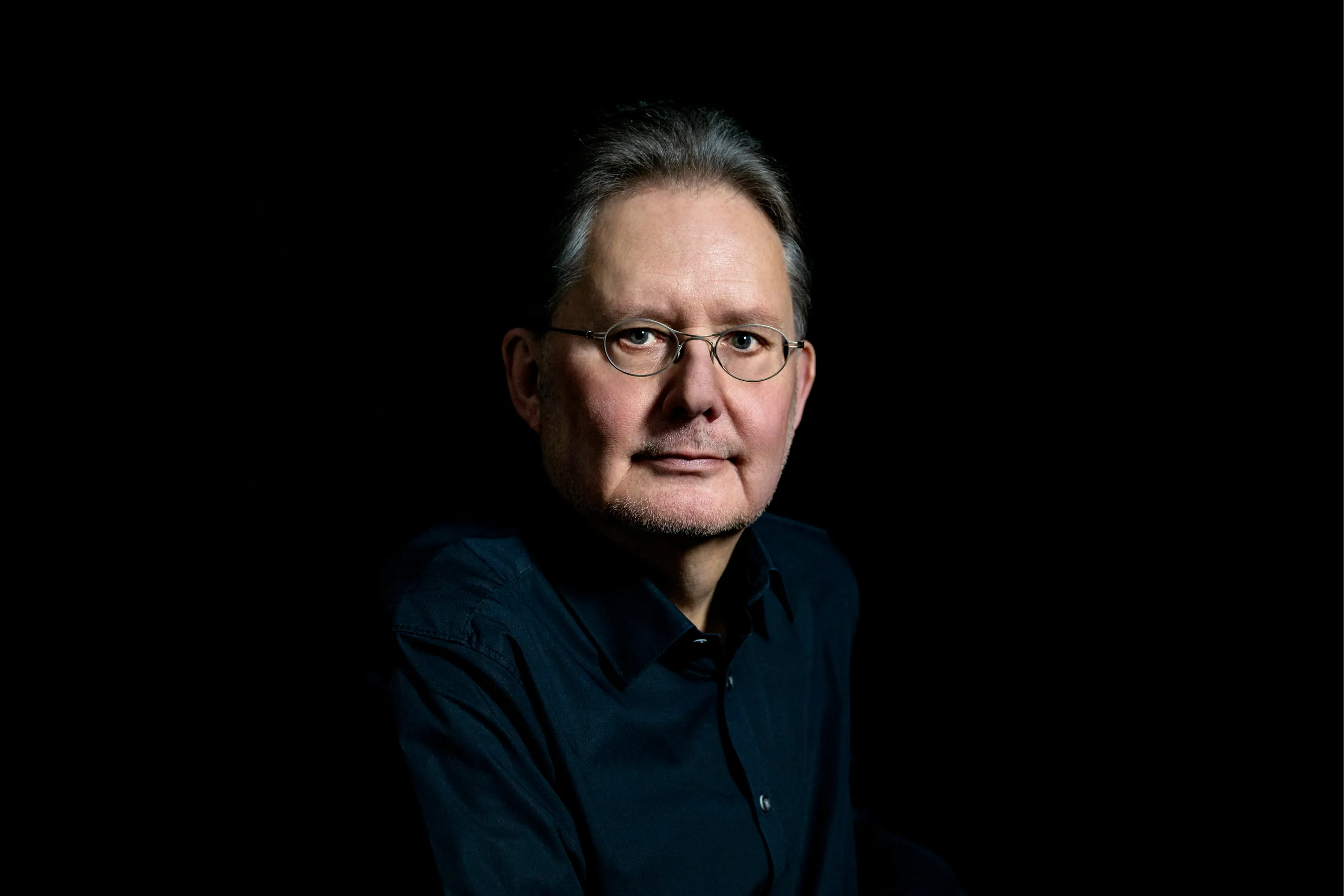
Stets ein wenig unruhig und reizbar blickt so das künstlerische Bewusstsein nach verlorenen Naivitäten sich um, in die es jedoch kein Zurück mehr gibt, da Bewusstmachungen irreversibel sind.
Always a little restless and irritable, artistic consciousness looks back on lost naivety, although there is no going back, because awareness is irreversible.
Siempre un poco inquieta e irritable, la conciencia artística busca a su alrededor la ingenuidad perdida, a la que ya no hay vuelta atrás, ya que las tomas de conciencia son irreversibles.
Sempre un po’ inquieta e irritabile, la coscienza artistica si guarda intorno alla ricerca di ingenuità perdute, verso le quali però non è più possibile tornare indietro, poiché le prese di coscienza sono irreversibili.